
MIWA 2026 – Bangkok | Program
The program will be updated periodically. Please check back regularly for updates.
Last updated: July 19, 2026
Program Book

Key Topics
Life-centric mobility, Inclusive mobility, Social value, Social acceptance, Walkable streets, Road safety
Digital twin, Software-defined vehicles (SDV), Automated driving, Connected vehicles, End-to-End (E2E) mobility systems
Mobility as a Service (MaaS), Mobility hubs, Micro-mobility
Smart cities, Sustainable mobility, Asian mobility markets
Program at a Glance
Day 1 – Tuesday, July 21
Technical Tour (CAV Sandbox at Wangchan Valley), Welcome Party
Day 2 – Wednesday, July 22
Plenary Sessions, Sponsor Presentations, Poster Session, Exhibits
Day 3 – Thursday, July 23
Plenary Sessions, Exhibits, Sponsor-Student Networking Session, Student Presentations, Farewell Dinner
Session Theme
Day 2 – Wednesday, July 22
Session 1: AI Shaping the Future of Mobility Systems
Session 2: Software-Defined Vehicles and the Transformation of Mobility
Session 3: Better Future with Data-Driven Urban Mobility
Day 3 – Thursday, July 23
Session 4: Mobility Innovation: Opportunities, Risks, and Societal Impacts
Session 5: Context-Responsive Mobility Solutions: Innovation from Asia
Session 6: Roundtable: Asia’s Role in Driving Mobility Innovation
Timetable
Click the image for a larger view.

Technical Program
Keynote 1 Day 2 – Wednesday, July 22
Thailand Autonomous driving technology landscape
As global transportation shifts toward automation, Thailand stands at a critical juncture in adopting Connected and Automated Vehicle (CAV) technologies. This presentation provides a comprehensive overview of the current CAV landscape in Thailand, beginning with an introduction to our institute’s latest innovations and strategic initiatives in robotics and autonomous systems.
We will explore the driving forces accelerating CAV adoption in the kingdom, specifically addressing urgent socio-economic factors such as an aging society and the demand for heightened logistical efficiency. The discussion will highlight the Thai government’s current roadmap and its strategic 3-year outlook, focusing on the highly anticipated adoption of Level 4 (L4) regulations tailored with a specific Thai environment annex.
Finally, the session will map out the local ecosystem, showcasing Thailand-based institutions and companies pioneering these technologies. By examining real-world, localized CAV deployments currently operating in closed-area campuses and industrial factories, this talk will deliver a realistic assessment of Thailand’s technological readiness and the collaborative path forward for the nation's autonomous future.
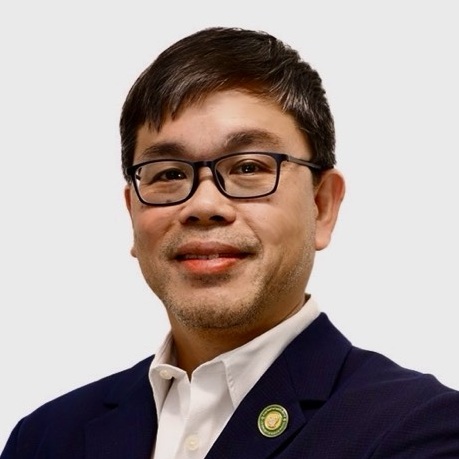
Dr. Pasan Kulvanit
Director, Institute of Innovative Robotics and Autonomous Vehicles
Department of Science Service, Ministry of Higher Education, Science, Research, and Innovation (MHESI)
Keynote 2 Day 3 – Thursday, July 23
Perspective on Asia’s evolving role in transportation innovation, sustainability, and regional collaboration based on China's experiences
Currently in Asia, metropolitan traffic problems still pose serious challenges, while urban travel demands are shifting toward high quality, diversity, and convenience. Moreover, transportation should serve as an engine for urban economic growth. Fortunately, the development of AI technologies offers new possibilities. By leveraging these tools, green, intelligent, and integrated systems become feasible, allowing us to optimize the entire network and solve existing issues. This paper provides a perspective and analysis of these trends.
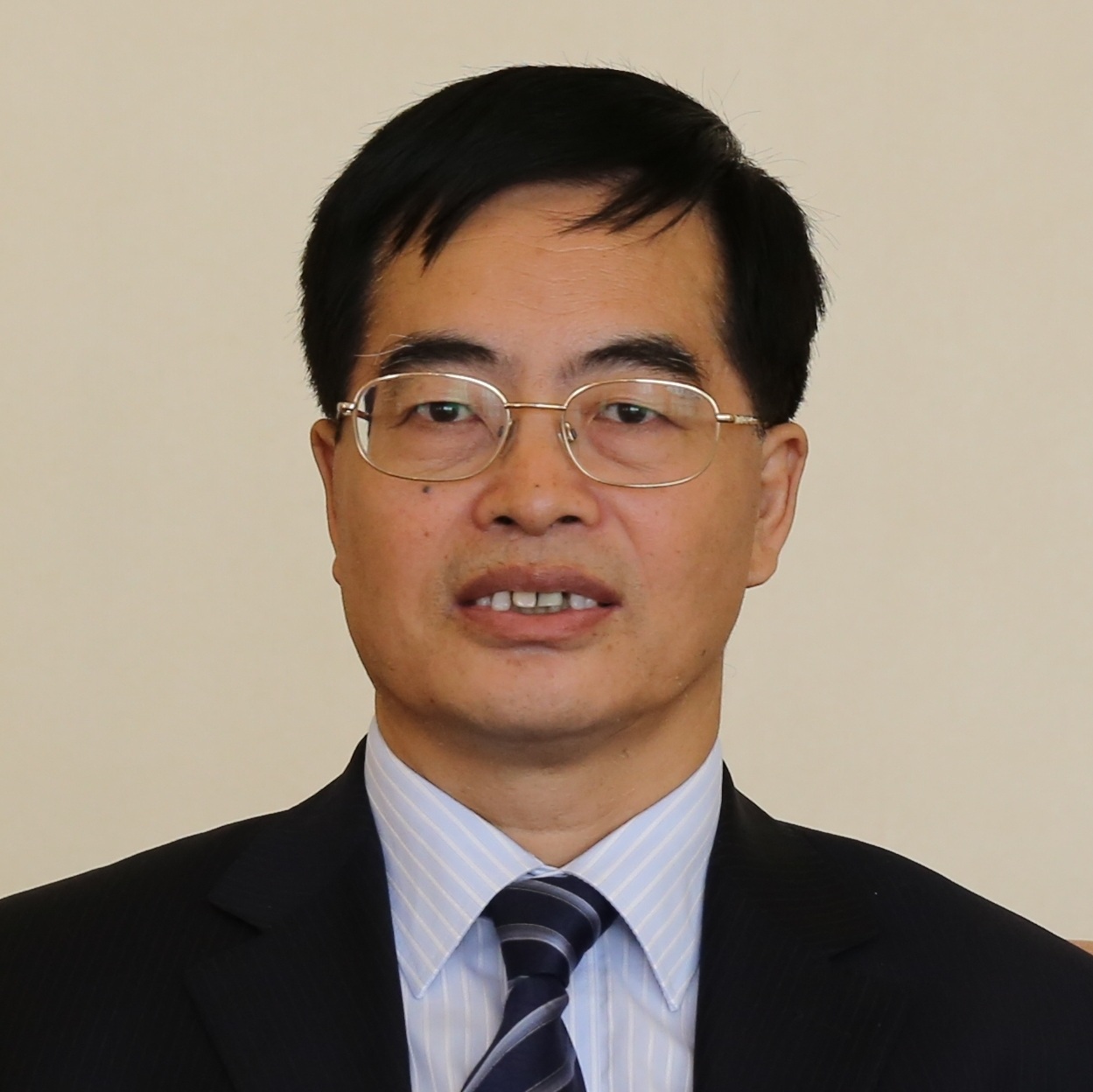
Professor Huapu Lu
Tsinghua University / Former Director, Institute of Transport Engineering, Tsinghua University
Session 1: AI Shaping the Future of Mobility Systems
AI is transforming how mobility systems are designed, managed, and experienced. This session focuses on the growing adoption of end-to-end AI approaches in automated driving and their implications for safety, system design, and real-world deployment. It also highlights emerging requirements for infrastructure, including V2X integration and data-driven environments.
Speakers: Manabu Tsukada (The University of Tokyo), Patiphon Narksri (TIER IV, Inc.), Ann Yu Shi (Pony.ai), Yuchen Zhang (Zelos Technology (Singapore) Pte. Ltd.)
Session 2: Software-Defined Vehicles and the Transformation of Mobility
Software-defined vehicles (SDVs) are shifting mobility from a hardware-centric paradigm to a software-driven, service-oriented ecosystem. This session explores how SDVs enable new functionalities, continuous system evolution, and new business models, while reshaping the structure of the automotive and mobility industries.
Speakers: Tsuguo Nobe (Nagoya University), Hiroaki Takada (Nagoya University), Venkatesh Prakash (Elektrobit India), Nuksit Noomwongs (Chulalongkorn University)
Session 3: Better Future with Data-Driven Urban Mobility
This session explores how digital twins enable new approaches to understanding, planning, and operating urban mobility systems. It focuses on how data-driven insights can reshape decision-making beyond traditional optimization.
Speakers: Non Arkaraprasertkul (Digital Economy Promotion Agency (DEPA) of Thailand), Nattapong Punnoi (Chulalongkorn University), Nobuo Kawaguchi (Nagoya University), Preechaya Saraphol (Department of Land Transport, Ministry of Transport)
Session 4: Mobility Innovation: Opportunities, Risks, and Societal Impacts
Mobility innovation brings both opportunities and challenges. This session explores its broader societal impacts, including potential risks, equity concerns, and long-term implications for cities and communities.
Speakers: Saroch Boonsiripant (Kasetsart University), Ariana Salas Castillo (Columbia University), Yosuke Uchiyama (Chulalongkorn University)
Session 5: Context-Responsive Mobility Solutions: Innovation from Asia
This session highlights practical and context-responsive mobility solutions emerging from Asia. It focuses on how local knowledge, constraints, and ingenuity shape implementable and sustainable approaches.
Speakers: Kimihiko Nakano (The University of Tokyo), Tawit Sangveraphunsiri (Urban Mobility Tech (MuvMi)), Kee Chong Yan (Nadi Willer Sdn. Bhd.), Yuhan Xiao (UITP Asia-Pacific Office)
Moderator: Manabu Umeda (The University of Tokyo)
Session 6: Roundtable: Asia’s Role in Driving Mobility Innovation
This roundtable brings together diverse perspectives to discuss Asia’s role in shaping the future of mobility. It explores how regional experiences can contribute to global mobility innovation.
Panelists: Sorawit Narupiti (Chulalongkorn University), Takayuki Morikawa (Nagoya University), Kimihiko Nakano (The University of Tokyo), Huapu Lu (Tsinghua University)
Sponsor Presentations
Day 2 – Wednesday, July 22 | 11:45–12:30
DENSO CORPORATION
Pioneering a New Future of Industries
Introduction of DENSO and R&D activity on Quantum
Pradit Mahasaksiri, Chief New Business Innovation Officer
TOYOTA TSUSHO SYSTEMS (THAILAND) Co., Ltd.
Surapong Somrang, General Manager, Product Planning Field
Toyota Tsusho Nexty Electronics (Thailand) Co., Ltd.
Toyota Tsusho Denso Electronics (Thailand) Co., Ltd.
NETH & TDET Introduction
Poster Presentations
Day 2 – Wednesday, July 22 | 13:15–13:45 | 4th Floor
Individual autonomy in advanced information society
Yuichi Kurata, Department of the Combined Graduate Program in Law and Political Science, Graduate School of Law, Nagoya University
Monocular Depth-Based Automatic Angle Knob Control for Colonoscopy
Taehyeong Kim, Department of Micro-Nano Mechanical Science and Engineering, Graduate School of Engineering, Nagoya University
Justice or Loyalty? Cultural Differences in Moral Priorities
Qiuhao Cui, Department of Cognitive and Psychological Sciences, Graduate School of Informatics, Nagoya University
Proposed design guidelines for low-friction catheters with a seeping lubrication mechanism
Yujie Zhao, Department of Micro-Nano Mechanical Science and Engineering, Graduate School of Engineering, Nagoya University
The Life Cycle of a Cumulonimbus Cloud Using Weather Radar and Camera
Kaito Saburi, Department of Earth and Environmental Sciences, Graduate School of Environmental Studies, Nagoya University
Emotional Response toward Gender Identity Nonverification
Yuka Mizuno, Department of Cognitive and Psychological Sciences, Graduate School of Informatics, Nagoya University
Encoding Fragmentary Waka Manuscripts in TEI/XML
Nanako Matsunaga, Department of Humanities, Graduate School of Humanities, Nagoya University
How Machine Translation effective in Thailand (tentative)
Kenji Iida, Department of Social Informatics, Graduate School of Informatics, Nagoya University
Supporting Second Language Learning through Semantic Visualization: A Study on Japanese Polysemous Verbs
Wenlian Huang, Department of Cognitive and Psychological Sciences, Graduate School of Informatics, Nagoya University
A Comparison of the Role of Motorcycles in Transportation in Japan and Thailand
Yota Adachi, Department of Micro-Nano Mechanical Science and Engineering, Graduate School of Engineering, Nagoya University
Competition Law and Fair Access in Future Mobility Services
Mingqi Liao, Department of the Combined Graduate Program in Law and Political Science, Graduate School of Law, Nagoya University
The new infrastracture of research automation for LLM
Takarnoi Kotama, Department of Computing and Software Systems, Graduate School of Informatics, Nagoya University
Realism in Japanese Modern Mysteries
Minamo Honji, Department of Humanities, Graduate School of Humanities, Nagoya University
Fabrication of an Ultra-Lightweight Electromagnetic Absorber for the Low-GHz Band
Eriko Kijima, Department of Chemical Systems Engineering, Graduate School of Engineering, Nagoya University
Anomaly Detection in Time Series Data via Hyper-Volume-Ratio-Based Outlier Factor
Yin Jiang, Department of Computer Science and Information Technology (CSIT), Faculty of Science, Chulalongkorn University
Contested Groun: The Production of Uneven Housing Flood Resilience in a Planned African Capital
Michael Ojo, Department of Urban and Regional Planning, Faculty of Architecture, Chulalongkorn University
Trustworthy AI for Autonomous Driving: Reward Fine-Tuning and LoRA Decomposition in Diffusion Planners
Yun Li, Graduate School of Information Science and Technology, The University of Tokyo
From Perceiving Together to Acting Together: Towards Cooperative Maneuver Coordination
Yu Asabe, Graduate School of Information Science and Technology, The University of Tokyo
Identification of urban traffic conditions based on spatial speed differences: An exploratory study
Somporn Sahachaiseree, Department of Human and Social Systems, Institute of Industrial Science, The University of Tokyo
Query-Free VLM-Based Temporal Scene Segmentation for Autonomous Driving
Sandaru Nanayakkara, School of Information, Computer, and Communication Technology (ICT), Thammasat University
Sponsor-Student Networking Session
Day 3 – Thursday, July 23 | 11:35–12:30 (TBA) | 4th Floor, Room 404
- TOYOTA SYSTEMS CORPORATION
Technical Tour on July 21: CAV Sandbox at WangchanValley
Participants will visit the Testing Center for Connected and Automated Vehicles (T-CAVs) at the Eastern Economic Corridor of Innovation (EECi), WangchanValley, Rayong Province —Thailand's first dedicated CAV sandbox area.
The visit features live demonstrations of an autonomous golf cart, a modified BYD autonomous car, a Smart Intersection system, and ADAS function tests including AEB (multi-angle) and ALKS, conducted on the proving ground and surrounding semi-public roads. Participants will also tour adjacent EECilab facilities covering automated warehouse systems, AGV/AMR robotics, and EV motor testing.
Highlights:
Thailand Development Plan: Showcasing the country's technology development roadmap, regulations, and the implementation of the sandbox for autonomous vehicle testing
Autonomous Vehicle Technology: Demonstration of Use Cases from global manufacturers, including Chinese, Japanese, and Korean technology
Low Altitude Economy: Demonstration of drone applications and the potential of Wang Chan Valley as a regulatory sandbox area operated under the supervision of the Civil Aviation Authority of Thailand (CAAT)
Co-located Event: Mobility Student Workshop
In conjunction with MIWA 2026 – Bangkok, we are excited to host a collaborative workshop featuring 30+ graduate students from Nagoya University—specifically from the Graduate Program for Lifestyle Revolution based on Transdisciplinary Mobility Innovation (TMI)—Chulalongkorn University, and other partner institutions. Bringing together diverse academic backgrounds beyond Engineering and Informatics, students from Law, Political Science, Commerce, and Humanities will team up to explore urban development challenges and tackle real-world mobility issues in Bangkok. This fieldwork-based program encourages transdisciplinary dialogue, and we look forward to witnessing their creative solutions and providing guidance through dedicated feedback sessions.