

MIWA 2026 – Bangkok | Program: Session 3
Session 3: Better Future with Data-Driven Urban Mobility
This session explores how digital twins enable new approaches to understanding, planning, and operating urban mobility systems. It focuses on how data-driven insights can reshape decision-making beyond traditional optimization.
Innovation-as-a-Service: Building Smart Cities That People Actually Want to Live In
Most smart city projects fail — not because the technology is bad, but because we build for machines instead of people. We spend billions on sensors, dashboards, and fancy infrastructure, then wonder why nobody uses them. At the Digital Economy Promotion Agency (depa), an national agency responsible for smart city development across Thailand's 77 provinces, we have spent almost a decade drafting smart city policies and building intelligent digital systems. What works?: Starting with what people actually need, not what vendors want to sell. In this talk, we will introduce 'Innovation-as-a-Service' — a framework with four steps: Purpose, Practicality, Proof, and People (4Ps). Start with a real problem. Use what you already have. Pilot small before scaling. And design incentives so people actually want to participate. The lesson is simple: cities become smart when technology works for people — not the other way around. No vendor required. No billion-baht budget needed. Just clear purpose, practical data, and a willingness to prove it works.

Non Akaraprasertkul
Senior Expert
Digital Economy Promotion Agency (DEPA) of Thailand
From Statistics to Mobility Intelligence: Applying Call Detail Records to Advance Tourism Planning in Thailand
Tourism planning in Thailand has traditionally relied on aggregate statistics such as visitor numbers, tourism revenue, and hotel occupancy rates. Although these indicators are useful for monitoring overall performance, they provide limited insight into tourists’ actual mobility patterns, including travel routes, destination linkages, length of stay, spatial concentration, and differences among visitor groups. This limitation often results in tourism development and infrastructure planning being based on assumptions rather than observed travel behavior.
This study applies anonymized Call Detail Record (CDR) data from mobile network usage to analyze tourist mobility across Thailand. The dataset covers the period from August 2023 to July 2024 and includes approximately 25 million domestic mobile users and 80,000 international visitors per month, representing more than 500 million recorded trips. The analysis was conducted across multiple spatial scales, from regions and provinces to districts, subdistricts, and individual tourism areas. Network analysis was also employed to identify travel linkages and functional tourism clusters.
The results demonstrate that CDR data can reveal tourists’ origins and destinations, travel flows, spatial concentration, length of stay, day-trip patterns, and interprovincial destination networks. The analysis identified 21 functional tourism clusters and informed the development of six pilot “Routes to Roots” clusters linking major cities, secondary cities, and local communities based on actual mobility patterns rather than administrative boundaries.
The findings suggest that CDR data can support a shift from conventional statistical monitoring to evidence-based and mobility-informed tourism planning. Such data can improve tourism route design, visitor distribution management, infrastructure investment, regional income distribution, and sustainable tourism development. Mobility data therefore has significant potential to serve as a data infrastructure for future tourism and regional planning in Thailand.
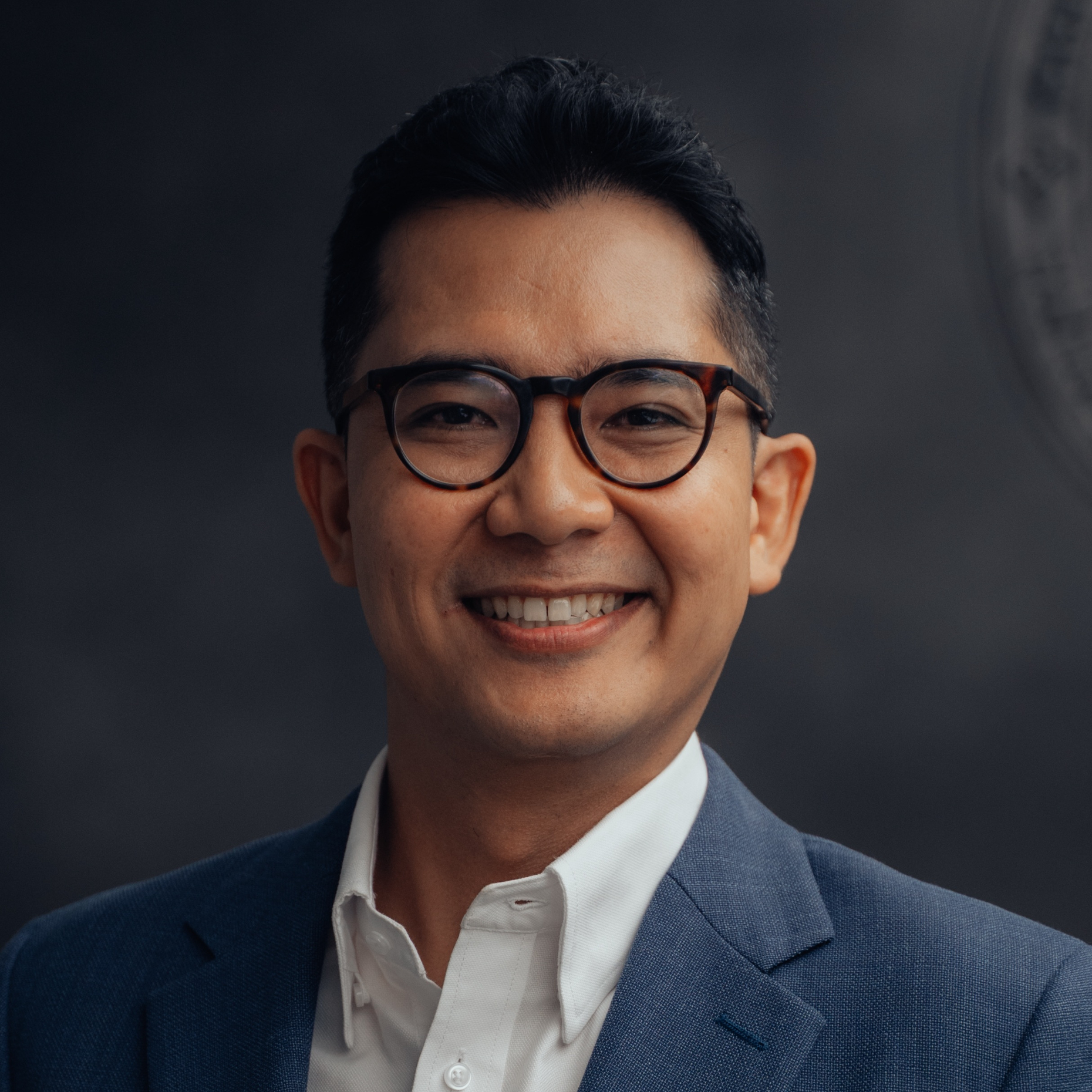
Nattapong Punnoi
Assistant Professor
Deputy Director, Center of Excellence in Social Design
Dean Assistant, Faculty of Architecture
Chulalongkorn University
Data-Driven Simulation and Visualization for Urban Mobility Analysis
This talk presents real-world urban mobility data analysis and agent-based simulation, showing how observed movement patterns can be modeled and visualized to better understand interactions among people, places, and transportation systems.

Nobuo Kawaguchi
Professor, Global Research Institute for Mobility in Society (GREMO), Institutes of Innovation for Future Society
Nagoya University
Data-Driven Planning for Sustainable Public Transport

Preechaya Saraphol
Transportation Technical Officer, Passenger Transport Bureau
Department of Land Transport, Ministry of Transport
Moderator: Non Akaraprasertkul, Digital Economy Promotion Agency (DEPA) of Thailand